
The Lie of “Full Funnel” Marketing
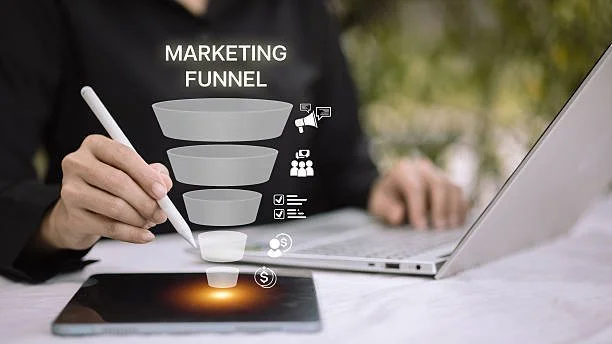
Everyone says they’re doing full funnel marketing.
Very few actually are.
Because what most brands call “full funnel” isn’t a connected system. It’s a collection of disconnected tactics, spread across teams, platforms, and partners, each optimizing for different outcomes.
On paper, it looks complete.
In practice, it doesn’t perform.
What “Full Funnel” Has Come to Mean
In theory, full funnel marketing is simple:
Awareness drives consideration
Consideration drives conversion
Conversion drives loyalty
A seamless journey from first impression to purchase, but inside most organizations, that journey is fragmented.
Awareness is handled by brand or social teams
Consideration lives with content or influencer
Conversion is owned by performance or retail
Data sits somewhere else entirely
Each team does their job.
Each channel reports success.
But none of it is truly connected.
Where It Breaks Down
1. Awareness Is Disconnected From Conversion
Brands invest heavily in top-of-funnel:
Influencer campaigns
Social content
Video and reach-based media
But when it comes time to convert? There’s no clear path forward.
No connection to:
Retail environments
Purchase signals
Real-world outcomes
Awareness is measured in impressions.
Conversion is measured in sales.
And the space in between is largely unaccounted for.
2. Teams Operate in Silos
Even when brands invest across the funnel, execution is rarely unified.
Influencer teams focus on engagement
Paid media teams focus on efficiency
Retail teams focus on sell-through
Different strategies.
Different timelines.
Different KPIs.
No shared system connecting them.
The result?
Effort without alignment, and spend without compounding impact.
3. There Is No Shared KPI
This is where most “full funnel” strategies fail.
Each layer of the funnel is measured differently:
Awareness → reach, impressions
Engagement → likes, views
Conversion → clicks, sales
But no one metric connects them all.
So while each piece may perform individually, the overall system doesn’t optimize toward a single outcome.
And that outcome should be clear:
Sales.
The Problem Isn’t the Funnel. It’s the Operating Model.
The concept of full funnel isn’t wrong, but the way it’s being executed is.
Most brands are still operating in:
Campaign cycles
Channel silos
Platform-specific reporting
Trying to create a connected outcome from a disconnected structure. It doesn’t work, because full funnel marketing isn’t about being present at every stage.
It’s about being connected across every stage.
What True Full Funnel Actually Looks Like
Real full funnel marketing functions as a system, not a sequence.
Where:
Content isn’t just creative - it’s built to drive media performance
Media isn’t just distribution - it’s built to drive retail action
Retail isn’t the endpoint - it feeds data back into the system
Each part informs the next.
Each signal strengthens the whole.
And most importantly, everything is measured against a single outcome.
One System. One Dataset. One Outcome.
At JONES, we approach full funnel differently.
We don’t think in stages.
We think in systems.
We build connected ecosystems where:
→ Influencer drives media
→ Media drives retail
→ Retail generates deterministic data
→ Data drives optimization
All within a single, unified framework.
Not separate teams.
Not separate metrics.
Not separate strategies.
One system.
One dataset.
One outcome:
Sales.
Why This Matters Now
The pressure on marketing teams has changed.
Budgets are tighter
Expectations are higher
AI is accelerating execution
There’s less room for inefficiency, and even less tolerance for disconnected spend.
Brands can no longer afford to:
Invest in awareness without accountability
Run campaigns without continuity
Measure success without linking it to business outcomes
The gap between activity and impact is being exposed.
The Shift Forward
Full funnel marketing isn’t going away, but it is evolving.
From:
Channels → systems
Campaigns → always-on
Metrics → outcomes
Because the brands that win won’t be the ones doing the most. They’ll be the ones who connect the most.
The Bottom Line
If your awareness doesn’t drive conversion, if your teams aren’t aligned, and if your data isn’t connected
You’re not doing full funnel marketing.
You’re doing fragmented marketing at scale.
And in today’s environment, that’s no longer enough.
Ready to Move Beyond the Funnel?
Most brands don’t need more marketing.
They need a better system.
At JONES, we help brands connect content, media, data, and retail into a single, measurable, closed-loop model, designed to drive real business outcomes.
If you’re rethinking your approach, let’s start a conversation